Expertise/ESS System Architecture
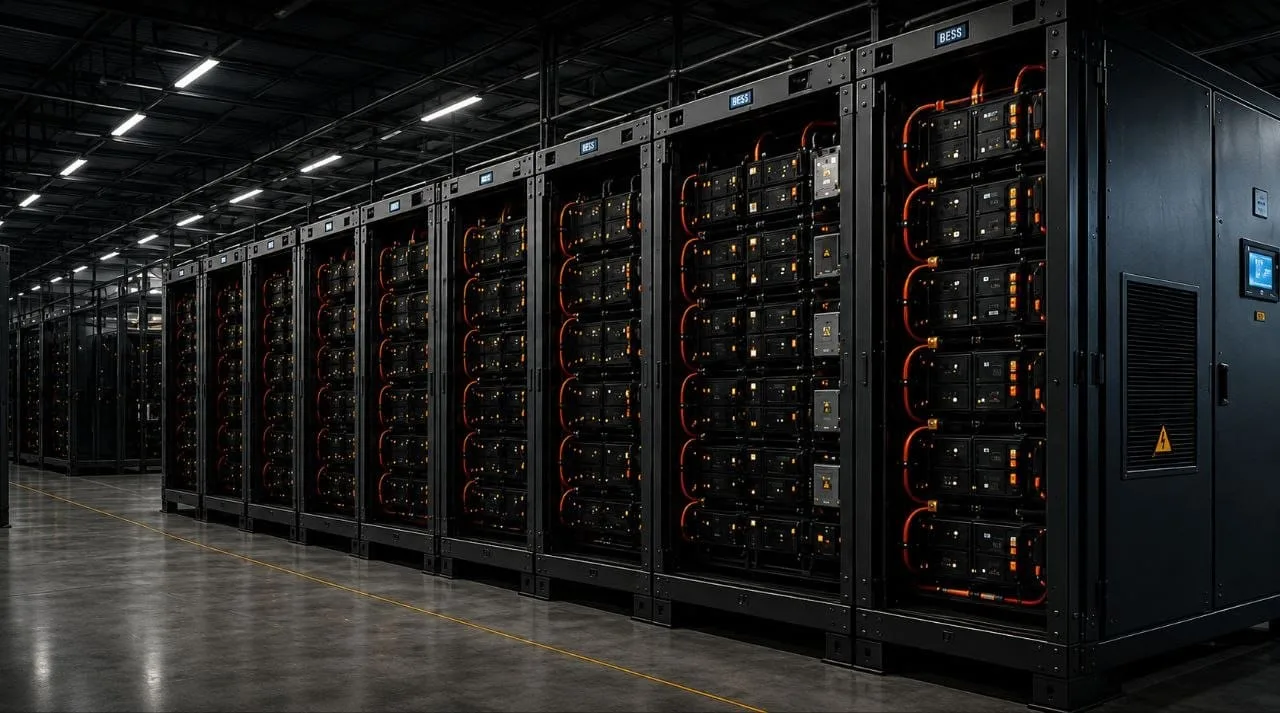
A bankable energy storage system begins with clearly defined system boundaries and disciplined engineering ownership. Our role is to deliver architectural clarity, well-controlled interfaces, and predictable system behavior under real operating conditions.
Our engineering scope covers all critical dimensions of ESS architecture to ensure safety, reliability, scalability, and long-term performance.
Power-dominant vs energy-dominant use cases, cycling profiles, ambient conditions, and lifetime expectations.
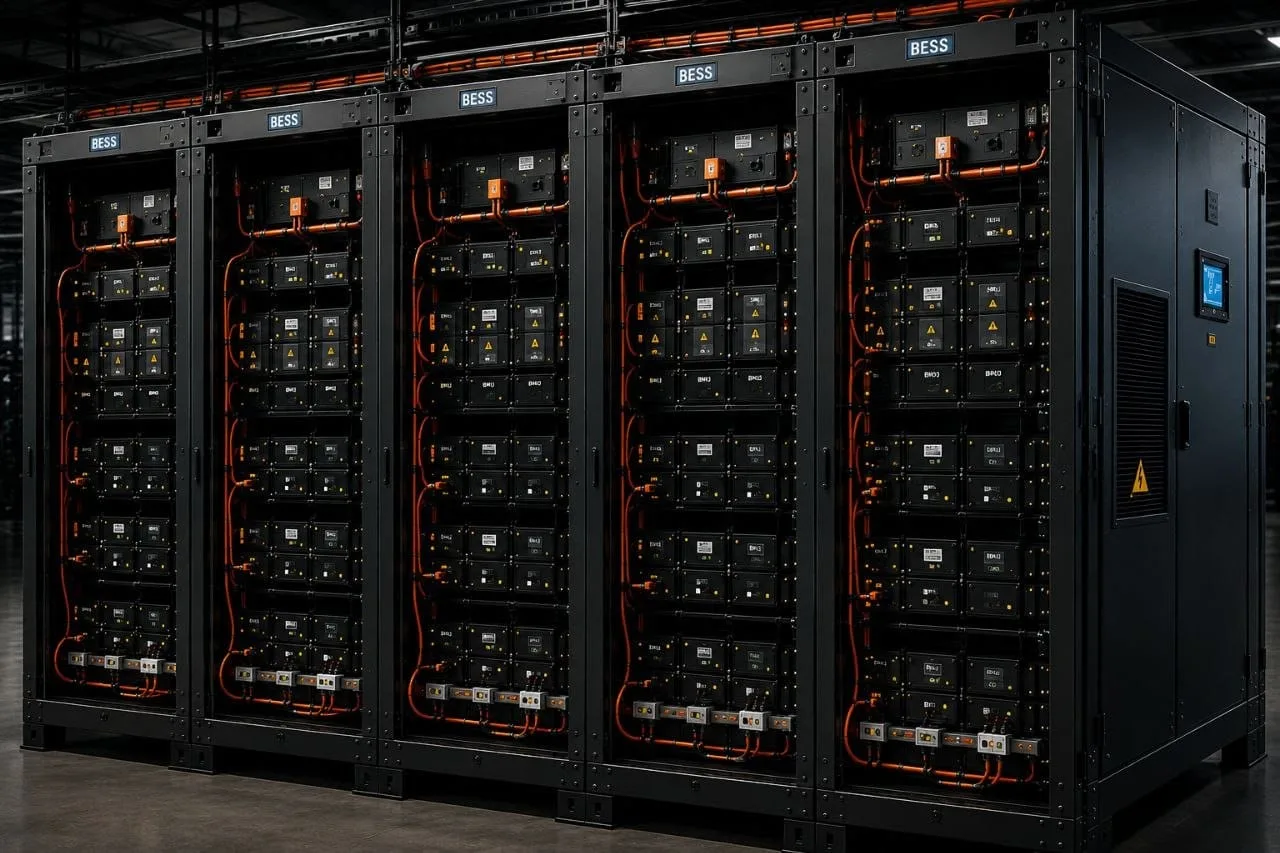
AC-coupled vs DC-coupled evaluation, rack and string topology definition, and system scalability considerations.
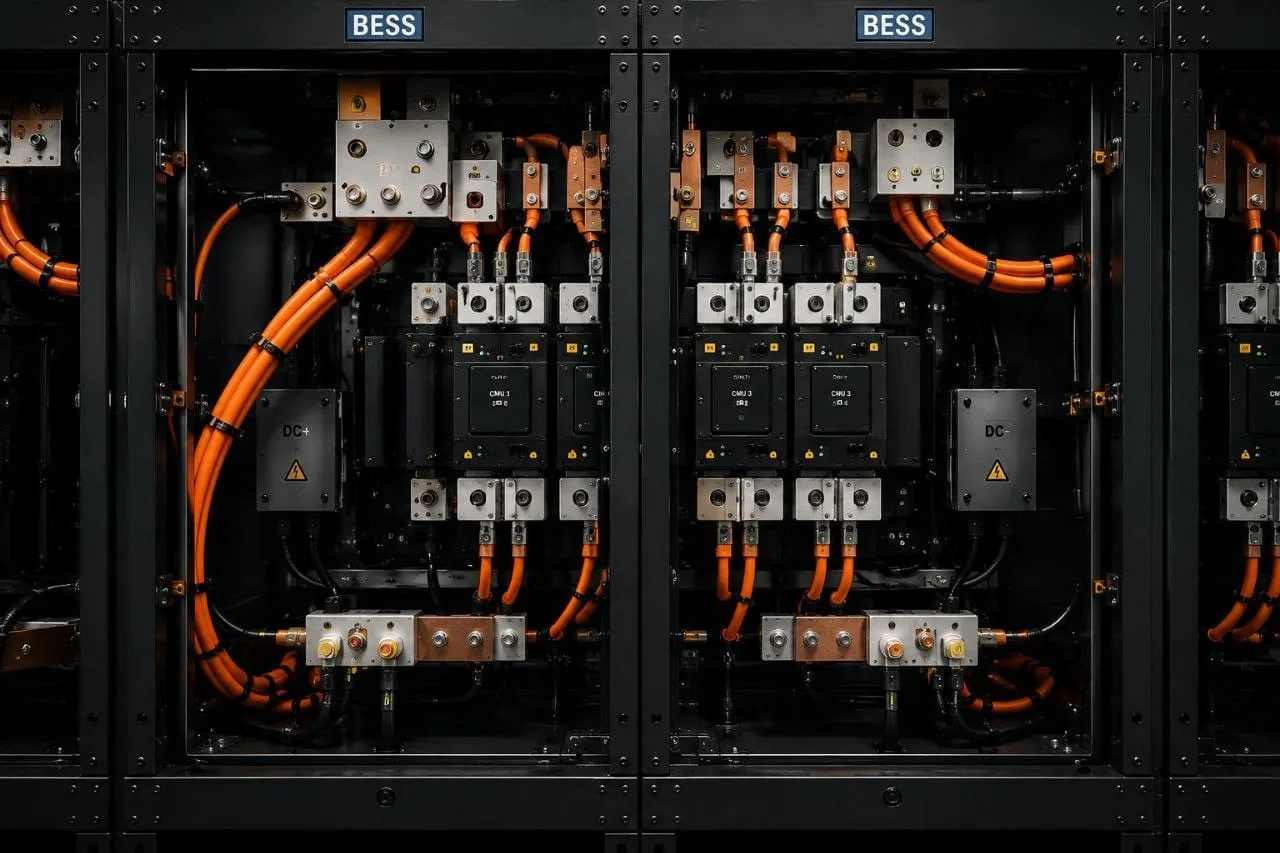
DC bus architecture, isolation philosophy, voltage levels, earthing, and segregation between subsystems.
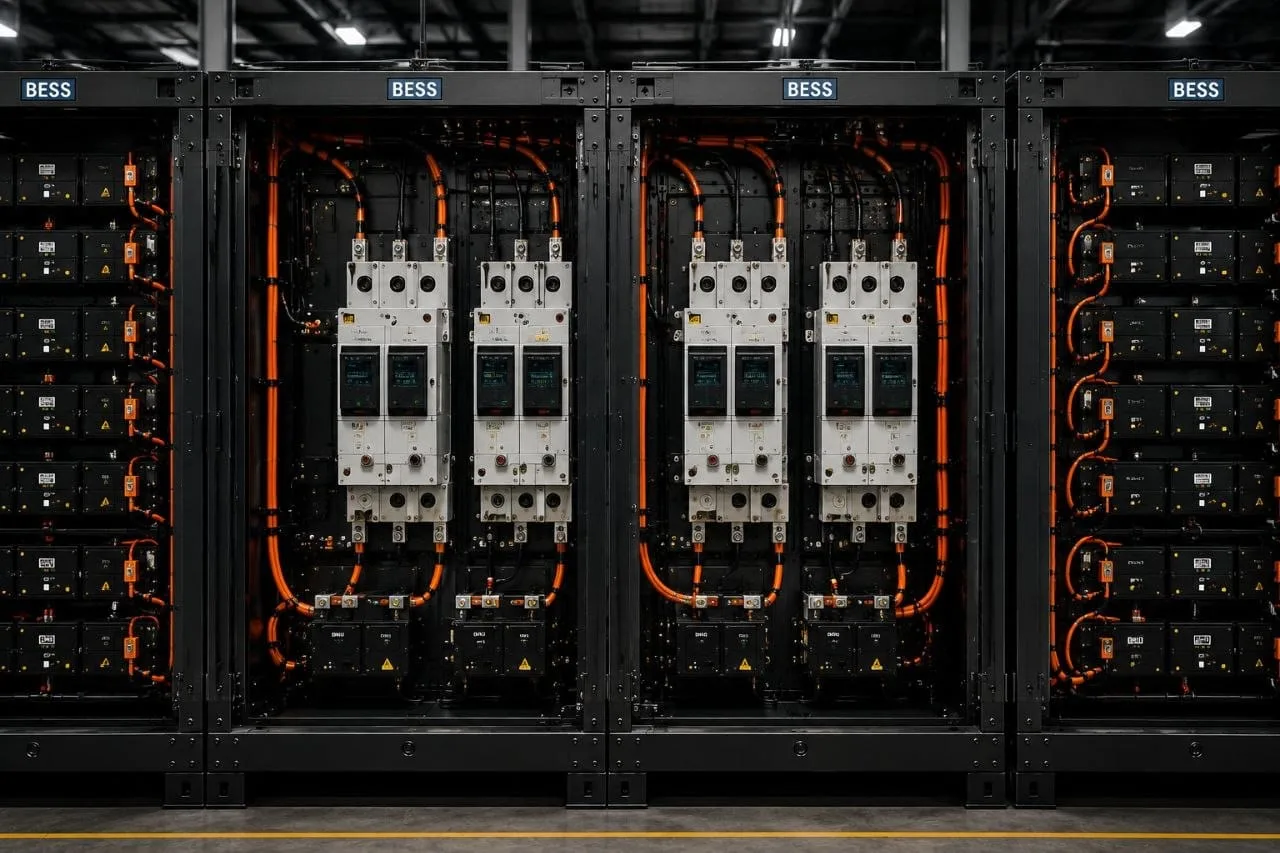
Redundancy logic and coordinated protection across DC and AC domains for safe and continuous operation.
Thermal management strategies including HVAC, ventilation, and heating for optimal performance across all environments.
Fire detection and suppression system interfaces and compartmentation strategies.
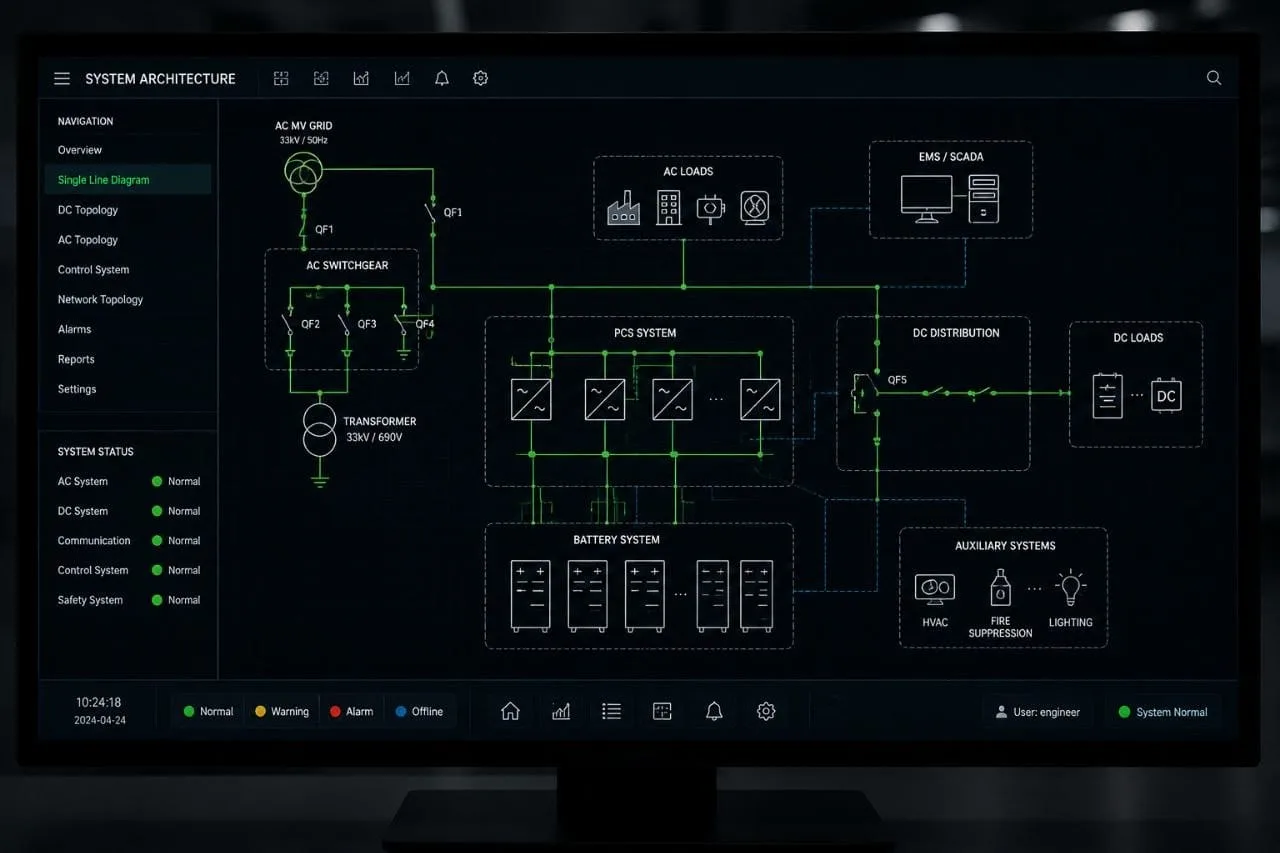
Well-defined interfaces between BMS, PCS, EMS, auxiliaries, and external systems.
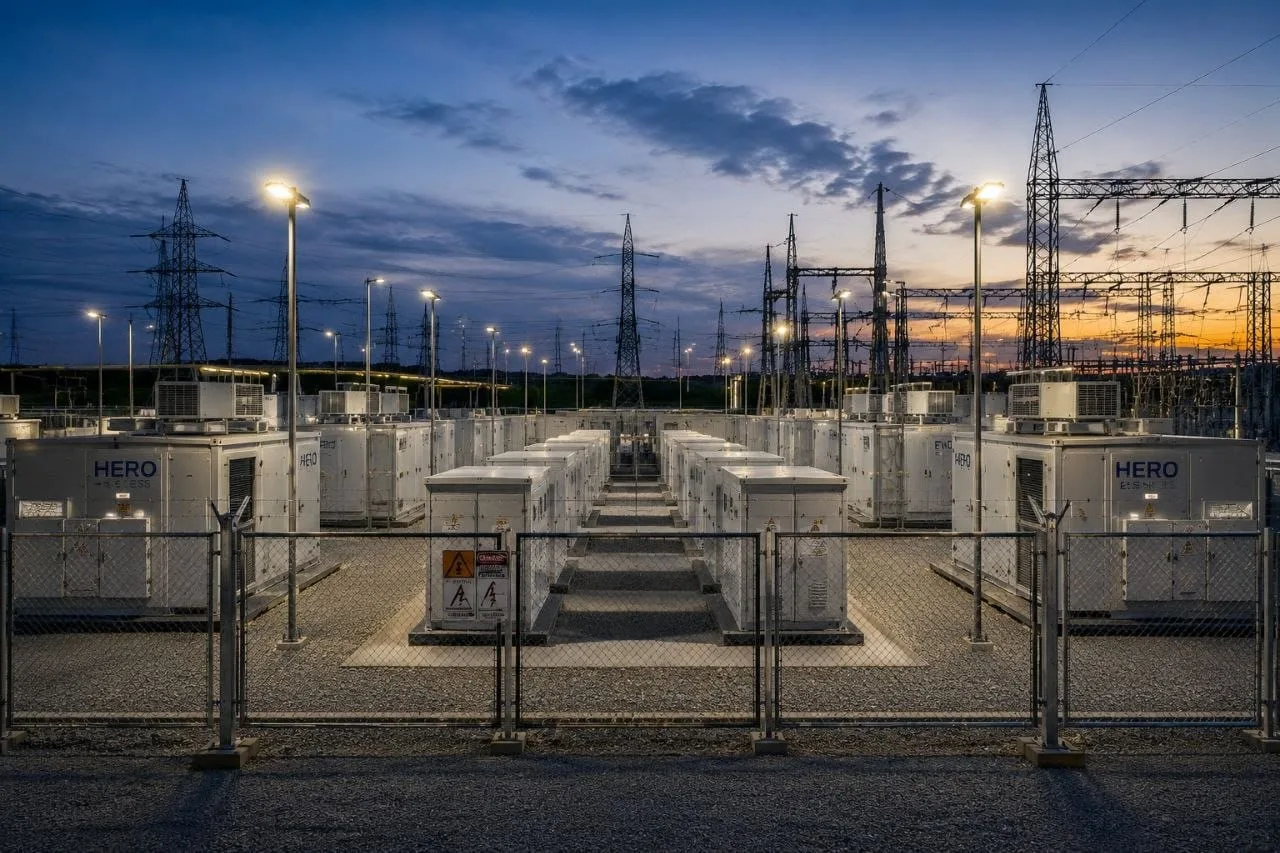
Grid interface single-line diagrams, protection philosophy, metering, and interconnection requirements.
Architecture aligned with UL 9540, UL 9540A, IEC standards, and applicable regulations.
Architecture designed for predictable performance, easy scaling, and future expansion without redesign.
01
Understand application, performance targets, constraints, and lifetime goals.
02
Define system topology, electrical architecture, interfaces, and safety boundaries.
03
Develop detailed design, calculations, schematics, and control strategies.
04
Define verification methods, test plans, and acceptance criteria.
05
Cross-domain integration review, risk assessment, and design freeze.
06
Prepare documentation, handover packages, and deployment guidelines.
01
Understand application, performance targets, constraints, and lifetime goals.
02
Define system topology, electrical architecture, interfaces, and safety boundaries.
03
Develop detailed design, calculations, schematics, and control strategies.
04
Define verification methods, test plans, and acceptance criteria.
05
Cross-domain integration review, risk assessment, and design freeze.
06
Prepare documentation, handover packages, and deployment guidelines.
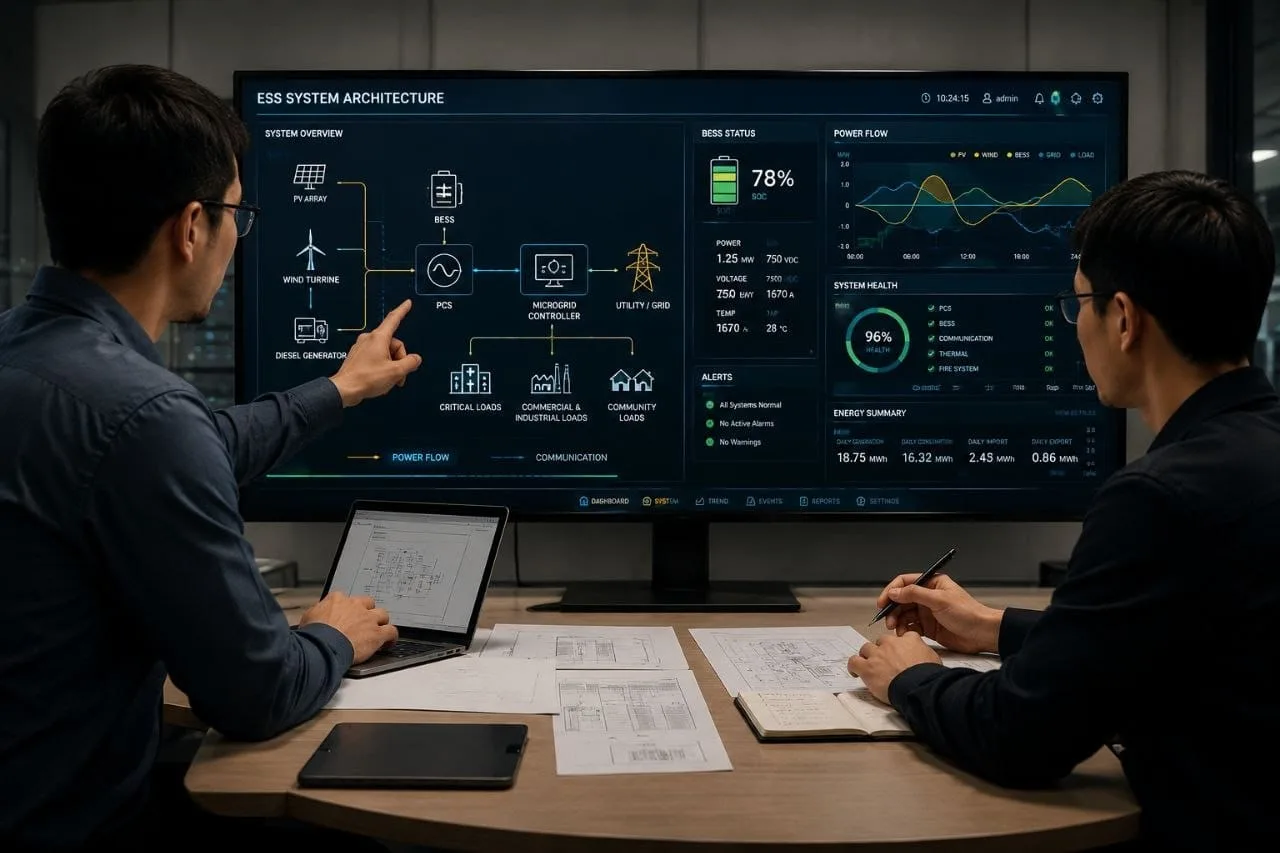
The result is a standardized, repeatable ESS architecture that can be reliably manufactured and deployed across multiple projects — not a one-off engineered solution.